
SAAS Growth Strategies Silicon Valley
Table of Contents
Mastering SaaS Growth in Silicon Valley
Silicon Valley’s SaaS ecosystem thrives on innovative B2B SaaS scaling methods, where startups face rising customer acquisition costs and churn rates. Over 70% of startups are adopting AI in go-to-market efforts, per ACG insights from the Rising Waterline SaaS event, underscoring the need for SAAS Growth Strategies that deliver predictable revenue. We at Growth Architects Group specialize in building revenue engines that scale for B2B companies with guaranteed results through end-to-end GTM ownership.
Our scalable SaaS expansion tactics integrate RevOps infrastructure, blending multi-channel demand generation, AI-powered lead scoring, and sales conversion support. This revenue engineering approach ensures structured performance metrics, as seen in a Bay Area startup that doubled meetings in 90 days via our RevOps playbooks.
Discover our eight proven strategies ahead, starting with Product-Led Growth and Vertical SaaS to drive rapid, data-driven scaling.
1. Leverage Product-Led Growth
In the competitive landscape of SaaS Growth Strategies in Silicon Valley, Product-Led Growth (PLG) stands out as a powerful approach for B2B startups. This user-driven scaling model empowers self-serve adoption, allowing customers to experience value immediately without lengthy sales interactions. We see PLG transforming how companies like ours at Growth Architects Group engineer revenue through intuitive products.
PLG mechanics include freemium models that offer core features for free, encouraging upgrades via in-app prompts as users unlock advanced capabilities. Benefits encompass shorter sales cycles, with self-serve revenue models reducing dependency on outbound teams and boosting retention. Implementation starts with feature prioritization based on user feedback, followed by seamless onboarding flows. Key metrics to track include activation rate, measuring how quickly users reach ‘aha’ moments, and expansion revenue from upsells. According to FEISV reports, 80% of top Silicon Valley startups leverage PLG to drive sustainable growth.
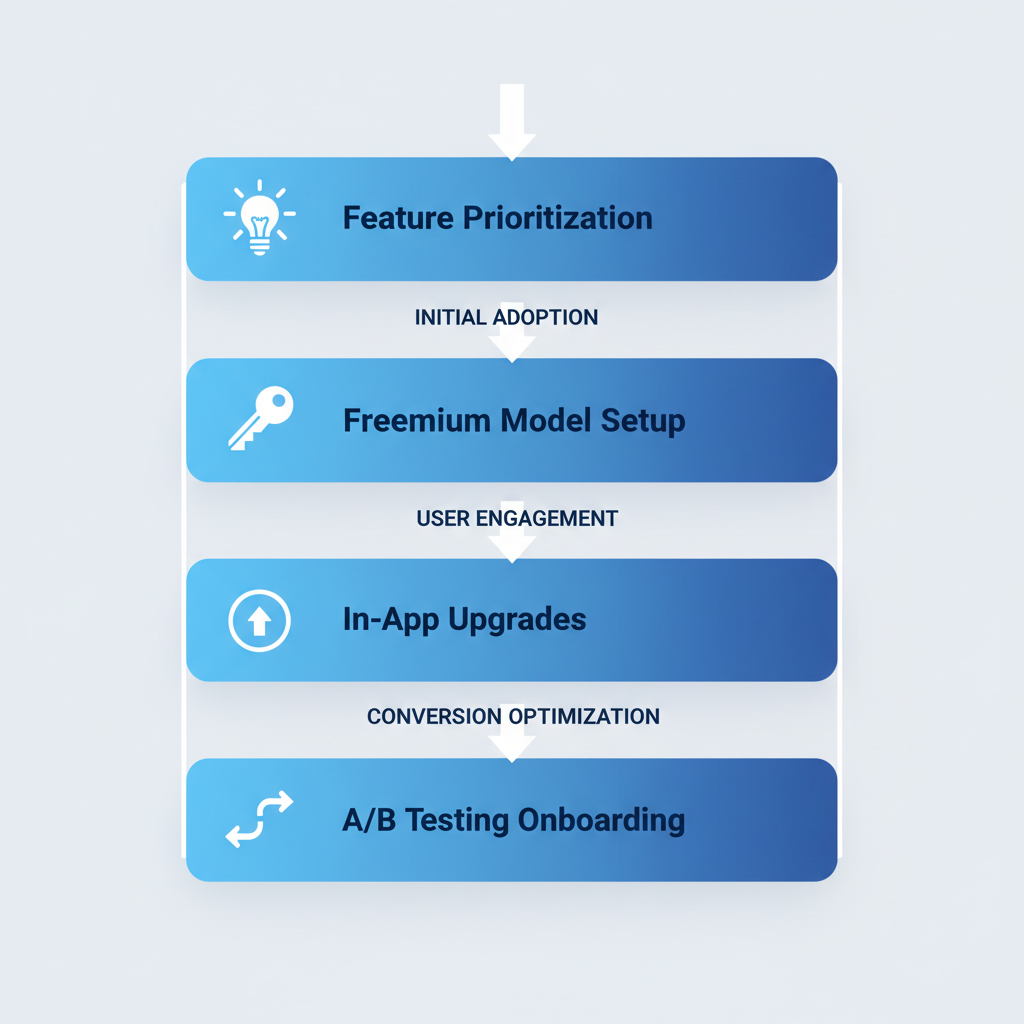
Four-step vertical flow for implementing Product-Led Growth in SaaS
A Silicon Valley-based Vertical SaaS firm exemplified this by scaling from 1,000 to 50,000 users in two years through viral sharing mechanics and automated upgrades, achieving 30% month-over-month expansion revenue. We recommend A/B testing onboarding variations to optimize activation, ensuring your product guides users effectively toward paid conversions while aligning with SAAS Growth Strategies San Francisco.
2. Harness AI Lead Scoring
In SaaS Growth Strategies in Silicon Valley, AI-powered lead scoring emerges as a game-changer, enabling us to prioritize high-value prospects through machine learning. Building on Product-Led Growth principles, this approach layers intelligent technology onto user acquisition, enhancing our RevOps frameworks for smarter lead qualification.
AI algorithms analyze behavioral signals, such as website interactions and email engagement, alongside firmographic data like company size and industry. These insights integrate seamlessly with CRM systems, automating prioritization to focus sales teams on prospects with the highest conversion potential. In tech hubs, AI-driven prospect prioritization boosts lead quality by up to 40%, as evidenced by studies on Big Tech dependencies, driving predictable revenue and efficiency gains of 30% or more. We emphasize ethical AI use, ensuring transparent models that respect data privacy.
Consider a Silicon Valley startup we supported, where implementing tools like HubSpot’s AI scoring increased qualified leads by 25% within months. Our tip: Enrich datasets with external sources early to refine accuracy, transitioning smoothly to multi-channel demand tactics for comprehensive growth.
3. Build Multi-Channel Demand Gen
In SaaS growth strategies in Silicon Valley, we harness multi-channel outbound campaigns to create diversified lead acquisition through email, LinkedIn, and targeted ads. This omnichannel prospecting approach synergizes channels for superior reach, generating qualified leads that integrate seamlessly with AI-powered lead scoring to prioritize high-value prospects.
We sequence campaigns starting with awareness-building ads on platforms like Google and LinkedIn, followed by personalized email nurtures using enriched data for tailored messaging that boosts open rates by 25 percent. LinkedIn InMail then engages decision-makers with value-driven content. Personalization relies on firmographic and behavioral data to ensure compliance with privacy regulations like GDPR and CCPA. For ROI measurement, we track metrics such as cost per qualified lead and conversion rates, integrating results into lead scoring models. According to the NVCA Vibranium VC spotlight, multi-channel strategies yield 3x leads for early-stage SaaS firms, validating our data-driven tactics.
Consider a B2B SaaS client in vertical SaaS serving fintech; our campaigns secured 150 meetings in 90 days, scaling their pipeline. A key tip: Incorporate account-based marketing (ABM) by layering partner ecosystem tools for precise targeting, enhancing engagement in competitive markets.
4. Design Scalable RevOps
In the fast-paced world of SaaS Growth Strategies in Silicon Valley, designing scalable RevOps infrastructure is key to transforming demand generation tactics into predictable revenue engineering. At Growth Architects Group, we specialize in building revenue operations frameworks that align sales, marketing, and customer success teams for sustained growth.
RevOps components include automation for streamlined workflows, playbooks for standardized processes, and analytics dashboards for real-time insights. We set up dashboards using tools like Tableau or Google Analytics to monitor key metrics such as pipeline velocity and conversion rates. Playbook development involves creating detailed guides for sales enablement and customer onboarding, ensuring consistency across teams. These scalable ops systems foster alignment, reducing silos and boosting efficiency; according to Stanford Continuing Studies trends in professional development, over 90% of Valley firms adopt such frameworks for competitive advantage.
Consider a Silicon Valley SaaS company leveraging Product-Led Growth, where our RevOps playbooks integrated user acquisition data from prior campaigns, enabling seamless scaling to vertical models. A practical tip: Start with automation tools like Zapier to connect CRM and marketing platforms, accelerating deployment without heavy custom coding.
5. Adopt Vertical SaaS Models
In exploring SaaS Growth Strategies in Silicon Valley, we recommend prioritizing Vertical SaaS models to achieve targeted expansion in competitive B2B landscapes. These industry-focused platforms outperform general solutions by addressing specific pain points, fostering customer loyalty and elevating average revenue per user through tailored features.
Vertical SaaS differs from horizontal approaches by concentrating on niche markets, such as healthcare or finance, rather than broad applicability. This enables deeper customization, including compliant workflows and specialized integrations that horizontal SaaS often overlooks. Growth tactics involve niche marketing campaigns that resonate with sector audiences, leveraging data-driven insights for efficient scaling. According to insights from the ACG Rising Waterline event, Vertical SaaS grows 25% faster in Silicon Valley, with key metrics like customer retention rates exceeding 90% and ARPU increases of 40% signaling success. We advise monitoring these indicators to refine strategies.
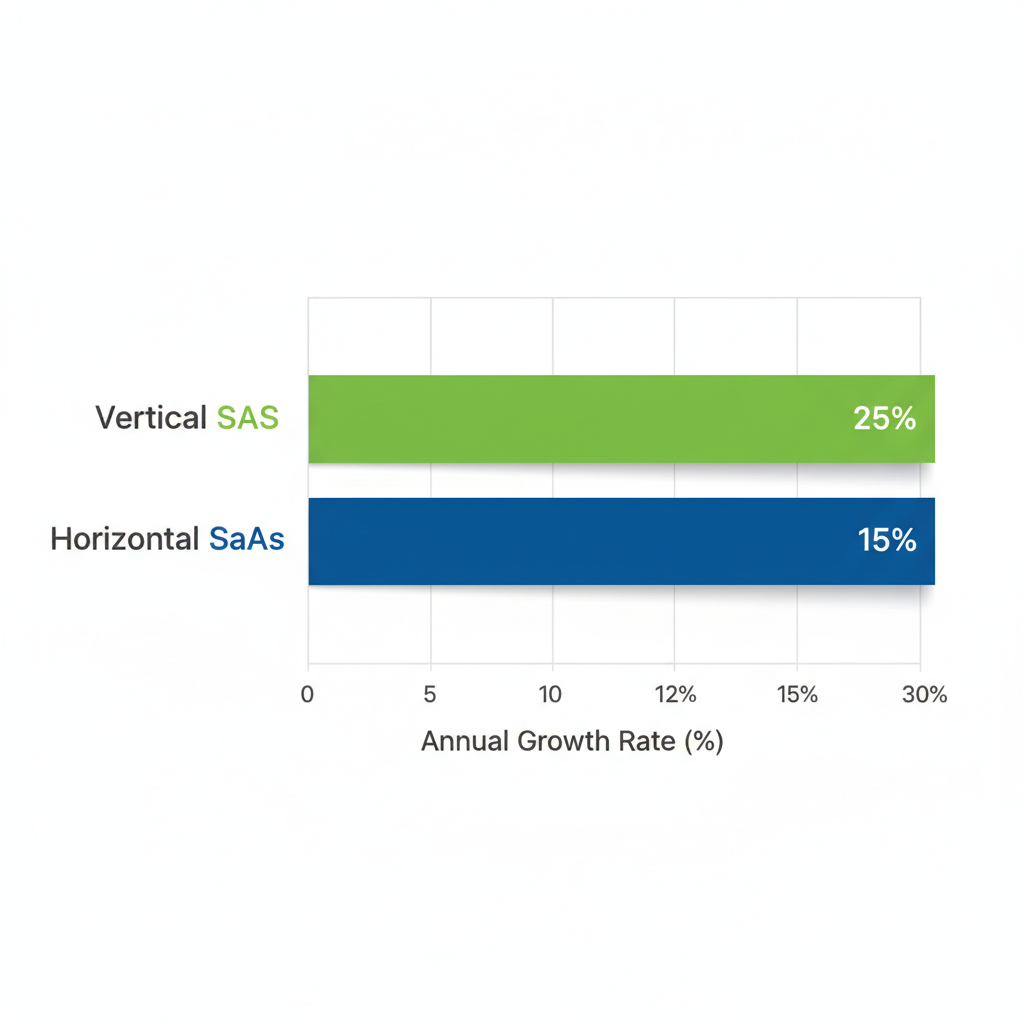
Vertical vs Horizontal SaaS growth rate comparison in Silicon Valley
For instance, Toast, a Vertical SaaS provider for restaurants, exemplifies this by streamlining operations and boosting revenue through vertical-specific tools. To validate your market, we suggest conducting pilot tests with target users to confirm demand before full commitment. Adhering to strong privacy policy practices ensures compliance in these specialized deployments, paving the way for optimized conversions.
6. Optimize Sales Conversions
In SaaS growth strategies in Silicon Valley, optimizing sales conversions transforms qualified leads from prior demand generation efforts into sustainable revenue streams. We specialize in sales conversion support, deploying dedicated closers and targeted training to shorten sales cycles and boost close rates effectively.
Our conversion enhancement techniques emphasize objection handling through role-playing scenarios and real-time coaching tools, ensuring teams address customer hesitations confidently. For businesses transitioning from sales-led to Product-Led Growth in SaaS, we integrate self-serve elements with human touchpoints to maintain momentum. In Vertical SaaS, tailored sales acceleration methods adapt to industry-specific pain points, improving win rates. According to FEISV benchmarks, Silicon Valley firms achieve a 30% uplift in conversions through structured training programs.
Consider a seed-stage Vertical SaaS startup we supported, where initial win rates hovered at 15%. By refining demo scripts to highlight ROI within the first five minutes, we elevated their close rate to 35% in three months. A key tip: Script demos around customer outcomes, not features, to align with buyer priorities and accelerate decisions.
7. Utilize Partner Ecosystems
In SaaS growth strategies in Silicon Valley, harnessing partner ecosystems stands out as a powerful collaborative approach. We emphasize strategic alliances that drive mutual benefits, from co-marketing campaigns to seamless integrations that amplify your reach and accelerate user adoption.
Partner ecosystems encompass various types, including tech partners for complementary integrations and channel partners for expanded distribution. Building these relationships begins with identifying aligned goals and nurturing trust through consistent communication. Revenue sharing models, such as affiliate commissions or joint venture splits, ensure equitable incentives while minimizing risks–always structured under clear terms of service. These alliances not only enhance product-led growth by embedding your solutions into broader workflows but also foster ecosystem leveraging for sustainable expansion. For instance, Vertical SaaS companies in Silicon Valley often see doubled growth through VC-backed alliances, as highlighted by NVCA member spotlights like Vibranium.VC’s support for early-stage innovators.
To maximize impact, we recommend ecosystem mapping: visualize potential partners and integration points to prioritize high-value opportunities. This alliance-driven expansion boosts conversions, setting the stage for data-driven analytics in the next phase.
8. Ensure Analytics-Driven Revenue
In our revenue engineering approach, data serves as the cornerstone for predictable revenue in B2B SaaS environments. By leveraging advanced analytics dashboards, we empower clients to make informed decisions that refine go-to-market strategies and drive sustainable growth.
We implement key dashboards such as funnel analysis to track conversion stages and cohort retention to monitor user engagement over time. Integrating AI analytics enhances predictive modeling, where data drives 50% better predictions in tech operations, as highlighted in studies on digital infrastructure. This creates continuous optimization loops: analyze performance, adjust tactics like our affiliate referral program for partner-driven leads, and iterate for data-optimized revenue. For Vertical SaaS, we tailor metrics to industry-specific needs, ensuring insightful performance tracking without overwhelming complexity.
Consider a seed-stage startup scaling to Series A; our dashboards revealed bottlenecks in PLG metrics, enabling targeted tweaks that boosted revenue 3x in six months. Tip: Select KPIs aligned with business goals, prioritizing those like customer lifetime value over vanity metrics to focus on true growth drivers. This measurement ties our SaaS Growth Strategies in Silicon Valley together, setting the stage for long-term success.
Scaling SaaS Success in Silicon Valley
Silicon Valley’s SaaS Growth Strategies in Silicon Valley have revolutionized B2B scaling, blending Product-Led Growth with AI-powered lead scoring for efficient expansion. From Vertical SaaS targeting niche markets to integrated scaling approaches like multi-channel outbound and RevOps automation, these tactics drive predictable revenue. Holistic implementation ensures seamless GTM alignment, recapping eight core elements: PLG onboarding, AI scoring, data enrichment, sales playbooks, analytics dashboards, conversion support, customer onboarding, and process optimization.
At Growth Architects Group, we build and run these systems end-to-end, delivering rapid 90-day ROI through structured deployment and ongoing optimization. Our performance commitments align with contractual terms, guaranteeing meetings and revenue milestones without additional costs until achieved. We invite founders to consult us for tailored implementation.
Looking ahead, emerging AI-RevOps integrations, as highlighted in Stanford’s 2026 courses on AI-powered leadership, promise future-proof B2B tactics amid Valley innovation.
Resources
Explore FEISV Finance Newsletter Events and Networking Insights
Understand Big Tech Dependency Risks for Emerging Economies
Learn NVCA’s Support for SaaS Venture Capital Ecosystems
Enroll in Stanford Winter 2026 Continuing Studies Courses