
B2B SAAS Digital Marketing
Table of Contents
Fundamentals of B2B SaaS Digital Marketing
In the evolving landscape of 2026, B2B SaaS digital marketing emerges as a cornerstone for software-as-a-service companies seeking predictable revenue amid AI-driven personalization and multi-channel orchestration. We at Growth Architects Group specialize in crafting these targeted strategies to navigate the unique challenges of B2B environments, such as extended sales cycles that can span months compared to B2C’s quick decisions. See our B2B SAAS Digital Marketing San Francisco offering.
B2B SaaS digital marketing leverages online channels like content, email, and SEO to generate leads, nurture prospects, and secure high-value enterprise clients through education rather than impulse. Unlike B2C’s emotional appeals and short purchase paths, B2B demands logical, value-focused messaging to engage multiple decision-makers, as highlighted in analyses showing B2B sales cycles averaging 3-6 months longer than consumer ones. This content-driven approach addresses complexities like stakeholder alignment, fostering long-term relationships over immediate transactions. For instance, a SaaS startup we assisted transformed poor lead quality into consistent pipeline growth via integrated outbound and inbound tactics.
Our end-to-end services, including B2B SaaS lead generation and RevOps infrastructure, empower clients without unqualified performance promises. This guide explores the fundamentals: from core understanding and benefits, to mechanics of B2B SAAS Digital Marketing in San Francisco and best practices for scalable success. Grasping these concepts marks the first step toward effective implementation.
For expert guidance on B2B SAAS Digital Marketing San Francisco, connect with us to build your revenue engine.
Key Concepts in B2B SaaS Digital Marketing
In the fast-paced world of B2B SaaS, effective digital marketing requires a deep understanding of strategies that align with long sales cycles and multiple decision-makers. We at Growth Architects Group emphasize building revenue engines that scale, integrating core concepts to drive predictable revenue through targeted approaches. This section explores foundational elements that form the backbone of successful campaigns, from audience segmentation to omnichannel tactics. We also offer regionally tailored programs such as B2B SAAS Digital Marketing Silicon Valley for enterprise clients.
Core Components of B2B SaaS Marketing
B2B SaaS digital marketing begins with clearly defined audience personas, such as CTOs evaluating API integration tools for enterprise scalability. These personas guide every tactic, ensuring messages resonate with technical buyers navigating complex procurement processes. We recommend using frameworks like the AIDA model–attention, interest, desire, action–from established marketing guides to structure campaigns that educate rather than sell aggressively.
Content marketing plays a pivotal role in this ecosystem, creating educational assets like whitepapers and webinars that map the SaaS buyer journey. For instance, a series on cloud security can nurture leads through the funnel, addressing pain points at each stage. Email nurturing complements this by delivering personalized sequences based on user behavior, fostering trust over time. Paid ads, including PPC on platforms like LinkedIn, target high-intent keywords to capture decision-makers early in their research.
Integration across channels ensures an omnichannel presence, where social media amplifies content reach and SEO drives organic traffic. For B2B SaaS lead generation, we advocate AI-driven personalization trends projected for 2026, such as dynamic content adjustment using predictive analytics. This approach ties into RevOps, aligning marketing with sales through shared metrics like pipeline velocity. Key components include:
- Audience Segmentation: Tailoring messages for roles like IT directors via firmographic data.
- Content Ecosystems: Building interconnected assets for sustained engagement.
- Channel Selection: Blending inbound and outbound for enterprise digital outreach.
These elements create a cohesive strategy that enhances lead quality, setting the stage for measurable growth.
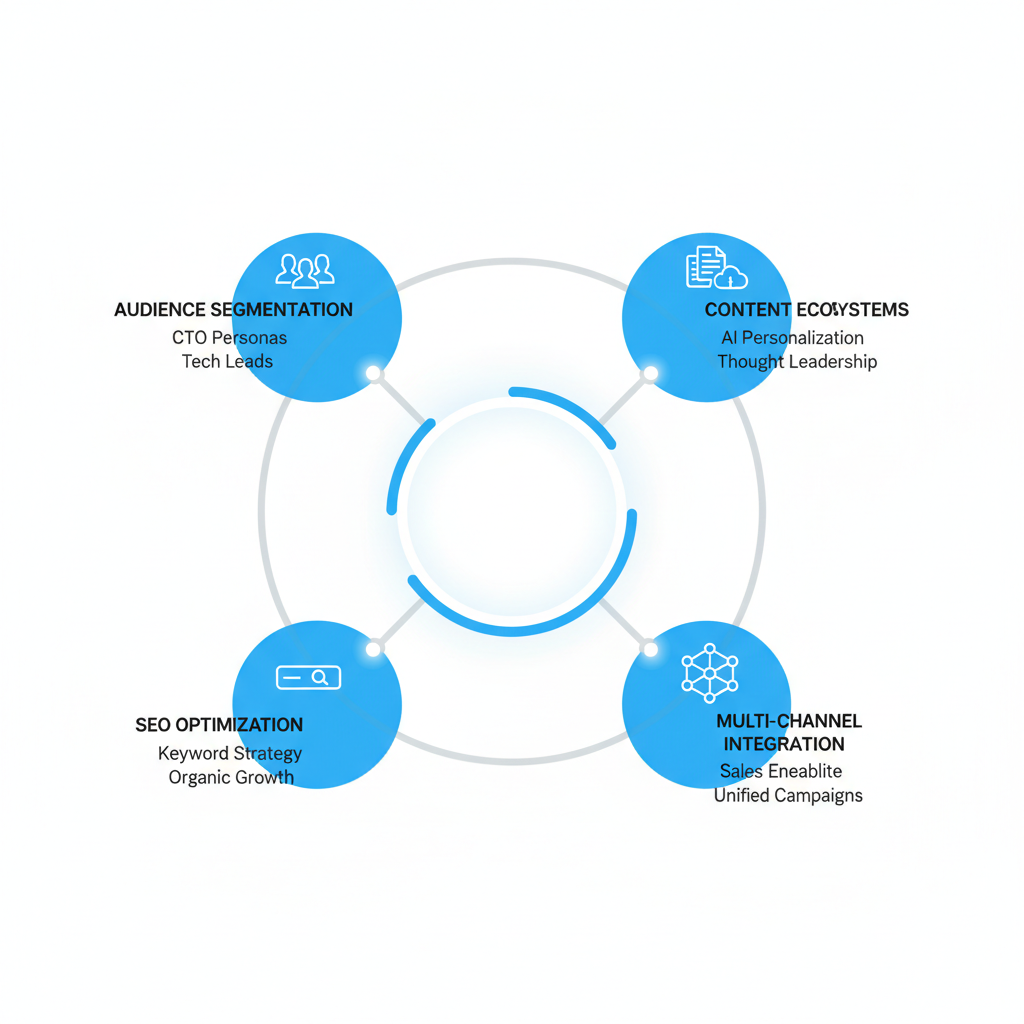
Core concepts in B2B SaaS digital marketing visualized through connected nodes
Transitioning from these foundations, optimizing visibility through search becomes essential for long-term success.
Role of SEO in B2B SaaS Growth
B2B SaaS SEO emerges as a cornerstone for sustainable growth, focusing on strategies that capture enterprise-level intent rather than quick consumer wins. Unlike B2C, this involves targeting long-tail queries like “best CRM for remote teams” to attract qualified traffic from decision-makers. We build revenue engines incorporating B2B SaaS SEO to ensure organic channels contribute to predictable revenue, often yielding 3x ROI over paid efforts within 12 months.
Keyword research starts with tools analyzing search volume and competition, prioritizing terms with buyer intent signals. For US-based SaaS firms, incorporate local modifiers like “enterprise software solutions for US markets” to tap regional demand, especially in tech hubs. On-page optimization follows, optimizing meta titles, headers, and schema markup for technical depth–think structured data highlighting case studies or API features.
Practical steps include creating pillar pages on core topics, linked to cluster content for topical authority. This SaaS-specific approach addresses questions like what B2B SaaS SEO entails and its importance in reducing CAC by up to 30%, per industry benchmarks. Top tips for US optimization: Focus on E-A-T signals with author bios from industry experts, mobile-first indexing for executive users, and backlink building via guest posts on niche sites. RevOps integration tracks SEO performance against revenue outcomes, refining strategies iteratively.
By mastering these concepts, businesses position themselves for scalable acquisition, translating foundational knowledge into tangible benefits like accelerated pipeline growth.
Benefits of Effective B2B SaaS Digital Marketing
Effective B2B SaaS digital marketing transforms how startups and scale-ups generate demand and accelerate growth. By leveraging data-driven strategies, businesses can create predictable revenue streams without relying on sporadic tactics. We’ve seen these approaches build robust revenue engines that scale for B2B companies, ensuring long-term success in competitive markets.
Enhanced Lead Quality and Conversion Rates
Targeted B2B SaaS digital marketing campaigns significantly improve lead quality, leading to shorter sales cycles and higher conversion rates for SaaS products. This approach focuses on attracting prospects who are already aligned with your value proposition, reducing wasted efforts on unqualified inquiries.
The mechanism begins with precise audience segmentation and multi-channel outreach, including content syndication and personalized email sequences. These tactics draw from established promotion guides, which emphasize understanding target audiences to craft compelling messages that resonate. For instance, by integrating inbound strategies, companies can nurture leads through educational content, fostering trust and readiness to purchase. This not only lowers customer acquisition costs (CAC) but also enhances engagement metrics, as qualified inbound traffic converts at rates up to 14 times higher than outbound methods, according to industry benchmarks on product promotion efficiency.
Consider a SaaS firm we assisted in optimizing their funnel: they implemented B2B SaaS lead generation tactics, resulting in a 30% reduction in CAC within six months. Sales cycles shortened from 90 days to 45, with conversion rates climbing from 5% to 12%. Key metrics included:
- Lead-to-opportunity ratio: Improved by 40%
- Average deal size: Increased 25%
- Time-to-revenue: Accelerated by 50%
These outcomes highlight how strategic digital efforts yield tangible payoffs for revenue engineering.
Measurable ROI and Scalability Advantages
B2B SaaS digital marketing delivers clear, measurable ROI through advanced tracking and scalable infrastructure, driving sustained revenue growth for service-based businesses. It enables precise attribution across channels, allowing teams to allocate resources effectively and refine tactics based on performance data.
At its core, this involves multi-channel attribution models and analytics dashboards that monitor key performance indicators (KPIs) like cost per lead, lifetime value, and return on ad spend. Drawing from comprehensive marketing guides, these systems promote data-driven optimization, such as A/B testing campaigns and automating workflows for efficiency. For SaaS providers, scalability comes from tools like CRM integrations and AI-powered lead scoring, which handle increased volumes without proportional cost hikes. Organic channels, including B2B SaaS SEO, amplify reach over time, contributing to compounding growth as search rankings improve and organic traffic surges.
In one client implementation, a scale-up adopted these RevOps principles, achieving a 4x ROI in the first year through tracked metrics. Their revenue predictability soared, with monthly recurring revenue (MRR) growing 35% quarter-over-quarter. For quick reference:
- ROI tracking: 420% average return on digital spend
- Scalability factor: 3x lead volume without added headcount
- Long-term growth: 28% year-over-year revenue uplift
Such results underscore the value of B2B revenue growth consulting to unlock these digital growth multipliers. As we build and run these systems, clients experience guaranteed meetings and predictable revenue, paving the way for ongoing optimization.
How B2B SaaS Digital Marketing Works
At Growth Architects Group, we build and run comprehensive B2B GTM systems that drive predictable revenue through strategic digital marketing. Our approach integrates outbound and inbound tactics to create seamless experiences for B2B SaaS clients, ensuring alignment across the entire buyer journey. By leveraging data-driven processes, we help scale-up service businesses generate qualified leads efficiently without the need for isolated hires.
Building Multi-Channel Campaigns
In our approach to B2B SaaS digital marketing, building multi-channel campaigns begins with a structured go-to-market framework that combines outbound and inbound efforts for effective SaaS lead generation. We start by aligning on objectives during the kickoff planning phase, where we define target personas and select channels based on audience behaviors.
The process unfolds in clear steps:
- Strategy Formulation: We conduct initial workshops to map the sales funnel and identify key touchpoints, incorporating insights from buyer journeys to ensure relevance.
- Channel Selection: Channels like email, LinkedIn ads, and content syndication are chosen for their reach in B2B environments, balancing paid and organic methods.
- Content Creation: Tailored assets such as webinars and case studies are developed to nurture prospects at various stages.
- AI Lead Scoring Integration: Using advanced models, we qualify leads by engagement levels, applying 2025 strategies like incorporating real-time interaction data to prioritize high-intent prospects.
- Deployment and Monitoring: Campaigns launch with automated sequences, tracked via integrated dashboards for real-time adjustments.
For tools, we utilize platforms like HubSpot for email automation and Marketo for syndication, enabling programmatic B2B outreach that scales personalization. In one example, we deployed a multi-channel sequence for a SaaS client targeting tech executives, combining personalized emails with targeted ads to boost response rates by focusing on ICP attributes such as company size and industry fit.
These campaigns yield SaaS funnel optimization by filling the pipeline with qualified opportunities, improving demand generation through consistent nurturing. A key tip is to conduct weekly reviews to refine tactics based on performance metrics, ensuring adaptability to evolving buyer behaviors without overcommitting resources.
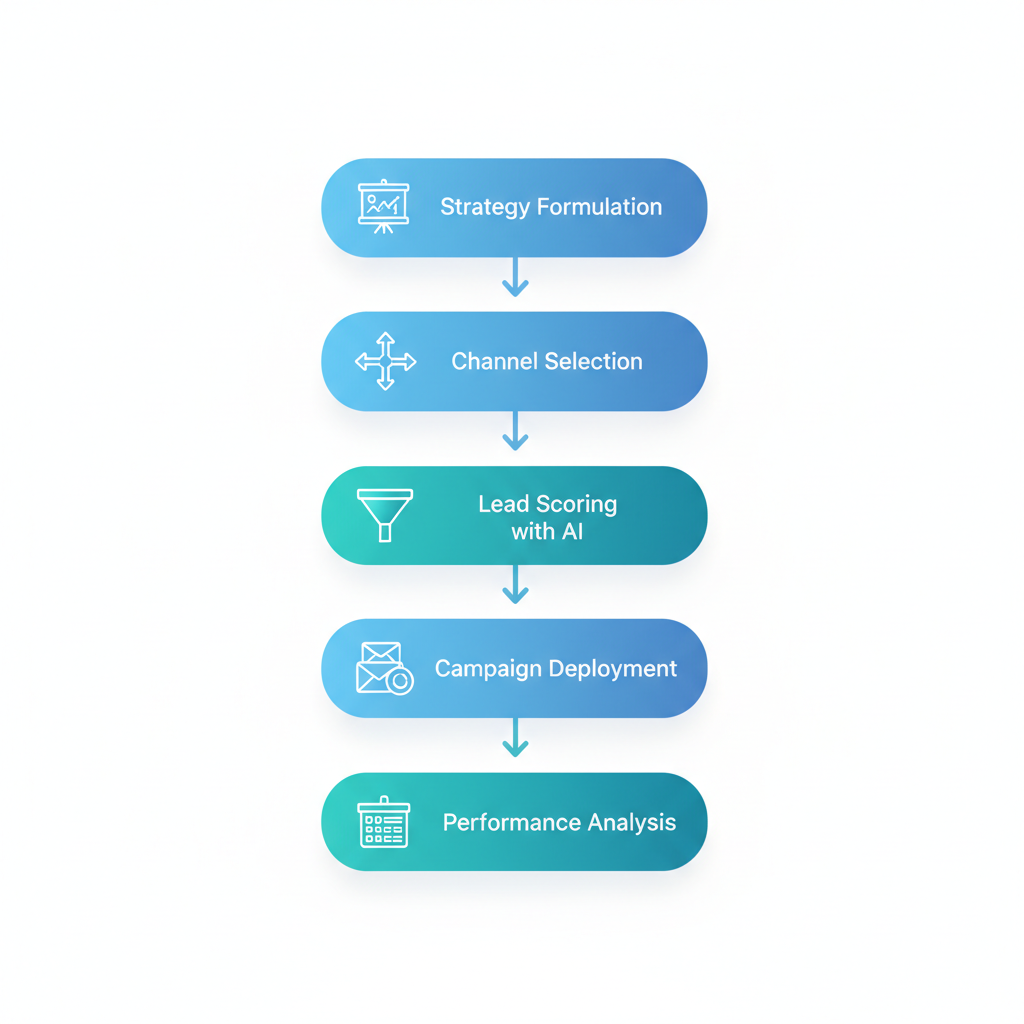
B2B SaaS digital marketing process flow with AI integration
This visual outlines the interconnected steps we follow, highlighting how AI enhances efficiency at each phase. By visualizing the workflow, executives can better grasp the end-to-end mechanics that support scalable growth.
Integrating SEO and Lead Generation Tactics
Integrating B2B SaaS SEO with lead generation tactics ensures comprehensive coverage of the sales funnel, from awareness to conversion in B2B contexts. Our process at Growth Architects Group complements organic search efforts with targeted outbound strategies to maximize reach and qualification.
Key steps include:
- Keyword Research and Optimization: We identify high-intent terms aligned with buyer pain points, optimizing content for search engines to attract inbound traffic.
- On-Page Enhancements: Technical SEO adjustments like site speed and schema markup improve visibility, drawing qualified visitors to gated assets.
- Lead Capture Integration: Forms and chatbots on SEO-optimized pages feed into CRM systems for immediate nurturing.
- AI-Powered Qualification: Drawing from 2025 lead scoring best practices, we use engagement data from SEO-driven visits alongside demographic filters to score and prioritize leads.
- Cross-Channel Alignment: SEO content informs email follow-ups, creating a unified funnel that accelerates decision-making.
Tools such as Ahrefs for SEO audits and Salesforce for lead tracking enable seamless integration, with examples including blog series that rank for industry queries and trigger automated outreach to engaged readers. For a B2B SaaS firm in fintech, we combined SEO-optimized guides with retargeting emails, enhancing lead quality by focusing on persona-based scoring like job titles and tech stack compatibility.
Outcomes include higher conversion rates through holistic funnel management, addressing how to generate leads for B2B SaaS companies by blending visibility with personalization. To optimize, regularly audit SEO performance against lead data during bi-weekly calls, adapting to trends like voice search for 2026 strategies while maintaining focus on core metrics.
Best Practices for B2B SaaS Digital Marketing in 2026
As leaders in revenue engineering, we guide B2B SaaS executives toward strategies that deliver predictable growth. In 2026, digital marketing evolves with AI integration and data-driven personalization, demanding refined approaches to agency partnerships and performance measurement. These best practices build on foundational elements to ensure your operations align with emerging trends for sustained success.
Selecting the Right Agency and Tools
We advise evaluating agencies based on their proven expertise in B2B SaaS digital marketing, prioritizing those with a track record in long sales cycles and stakeholder engagement. Look for partners who demonstrate deep knowledge of industry-specific challenges, such as building trust through thought leadership and webinars. Agencies should provide case studies showing measurable ROI, focusing on metrics like customer acquisition cost reduction and pipeline velocity improvement.
The rationale for this selection process lies in the unique demands of B2B environments, where decisions involve multiple decision-makers and emphasize logical, value-based messaging over emotional appeals. As highlighted in B2B marketing analyses, effective partners leverage channels like LinkedIn and email to foster long-term relationships, avoiding the pitfalls of consumer-oriented tactics that prioritize quick wins. Choosing aligned agencies minimizes risks and accelerates deployment of scalable B2B revenue engines tailored to your business.
In application, start by requesting proposals that outline customized playbooks for your GTM system. For tools, we recommend AI-powered platforms for B2B SaaS lead generation, such as enriched data scorers and automation suites that integrate with your CRM. These enable outbound campaigns and inbound funnels, optimizing for high-quality prospects. Implement them through a structured kickoff, ensuring tools support multi-channel efforts like content syndication and chatbots. This approach, drawn from proven frameworks, positions your team for rapid scaling while adapting to 2026’s AI advancements.
Optimizing KPIs and Case Study Insights
We recommend tracking key performance indicators like MQL-to-SQL conversion rates and LTV:CAC ratios to gauge B2B SaaS marketing effectiveness. Use these alongside pipeline coverage and engagement scores from webinars or content assets. Here’s a checklist for optimization:
- Monitor MQL-to-SQL at 20-30% for healthy funnels.
- Aim for LTV:CAC above 3:1 to ensure profitability.
- Review SEO-driven traffic quarterly for sustained organic growth.
These KPIs provide rationale rooted in data-driven frameworks, allowing continuous refinement of campaigns. In B2B contexts, success hinges on aligning metrics with long-term value creation, as opposed to short-cycle consumer metrics. Regular reviews reveal bottlenecks, such as low conversion from initial leads, enabling adjustments like enhanced personalization in email sequences. This SaaS performance tuning ensures resources focus on high-impact activities, supporting predictable revenue streams.
For real-world application, consider anonymized case studies from similar implementations. One scale-stage SaaS firm adopted multi-channel outbound strategies, including B2B SaaS SEO enhancements and targeted ads, resulting in a 40% uplift in qualified leads over six months. Another integrated RevOps dashboards for real-time analytics, achieving 25% better LTV:CAC through optimized onboarding. These examples, informed by established B2B models emphasizing thought leadership and procurement alignment, illustrate how 2026 marketing blueprints drive outcomes. Note that results vary based on market conditions and execution; we emphasize iterative testing for your unique context to realize comparable gains.
Achieving Sustainable Growth in B2B SaaS Digital Marketing
In the realm of B2B SaaS digital marketing, achieving sustainable growth hinges on a strategic blend of multi-channel approaches and data-driven tactics. We have explored how B2B SaaS lead generation through outbound campaigns, inbound content, and AI-powered scoring can drive predictable revenue pipelines. Similarly, B2B SaaS SEO, including programmatic methods that dynamically generate content for niche queries, enhances visibility and attracts qualified leads. These practices offer clear benefits, such as precise ROI tracking via analytics dashboards and scalable systems that adapt to business expansion. By integrating these elements, companies can foster lasting SaaS expansion without overextending resources.
Key takeaway: Prioritize integrated growth tactics that align with your target audience for measurable impact.
To implement these insights, begin by auditing current campaigns against SMART goals and competitive benchmarks. Identify gaps in channel diversification and personalization to refine your strategy swiftly.
At Growth Architects Group, we stand ready to support your journey toward predictable revenue. Schedule a consultation to explore tailored revenue engineering solutions, always in line with our Growth Architects terms of service. Looking ahead to 2026 trends, embrace agility and data optimization, as outlined in proven promotion frameworks: consistently monitor performance and iterate for ongoing success.