
SAAS Growth Strategies
Table of Contents
Unlocking SaaS Growth Through Proven Strategies
In the competitive landscape of B2B SaaS, founders and executives face persistent challenges like inconsistent lead quality and scaling hurdles that disrupt revenue predictability. Effective SaaS Growth Strategies emerge as essential frameworks, integrating outbound tactics, data enrichment, sales support, and analytics to foster scalable SaaS expansion tactics. These approaches promise enhanced ROI by streamlining B2B revenue acceleration methods.
Definition: SaaS Growth Strategies
Repeatable systems combining demand generation, AI lead scoring, RevOps infrastructure, and multi-channel campaigns to drive predictable revenue for online service businesses.
At Growth Architects Group, we specialize in SAAS Growth Strategies San Francisco, building end-to-end go-to-market systems inspired by step-by-step models from the AMA’s Ultimate Guide to Marketing Frameworks. Our 8 key strategies–spanning B2B SaaS demand generation playbooks, SaaS customer acquisition optimization, and RevOps setups–address these pain points, ensuring contractual performance metrics for guaranteed meetings and outcomes.
Start with a self-assessment of your GTM gaps: review lead flow, conversion efficiency, and analytics readiness. This foundational step reveals opportunities for rapid deployment, transitioning seamlessly into demand generation essentials that power sustainable growth.
1. Building Demand Generation Playbooks
In the realm of SAAS Growth Strategies Silicon Valley, effective playbooks are essential for scaling leads efficiently. We craft these lead funnel blueprints to boost qualified opportunities by up to 30% in B2B environments, aligning with broader revenue engineering goals.
At Growth Architects Group, we structure B2B SaaS demand generation playbooks around precise audience segmentation, targeting decision-makers in tech and finance sectors. Multi-channel tactics integrate email nurtures, LinkedIn outreach, and webinars to nurture prospects through longer sales cycles typical in SaaS. Development begins with goal setting, such as aiming for 20% conversion lifts, followed by KPI alignment on metrics like MQL-to-SQL progression. Tools like HubSpot for automation and Google Analytics for tracking ensure data-driven execution. As detailed in the Ultimate Guide to Marketing Frameworks, step-by-step models emphasize iterative testing, while Coursera highlights SEO and content alignment for niche SaaS audiences, projecting market growth to $819 billion by 2030.
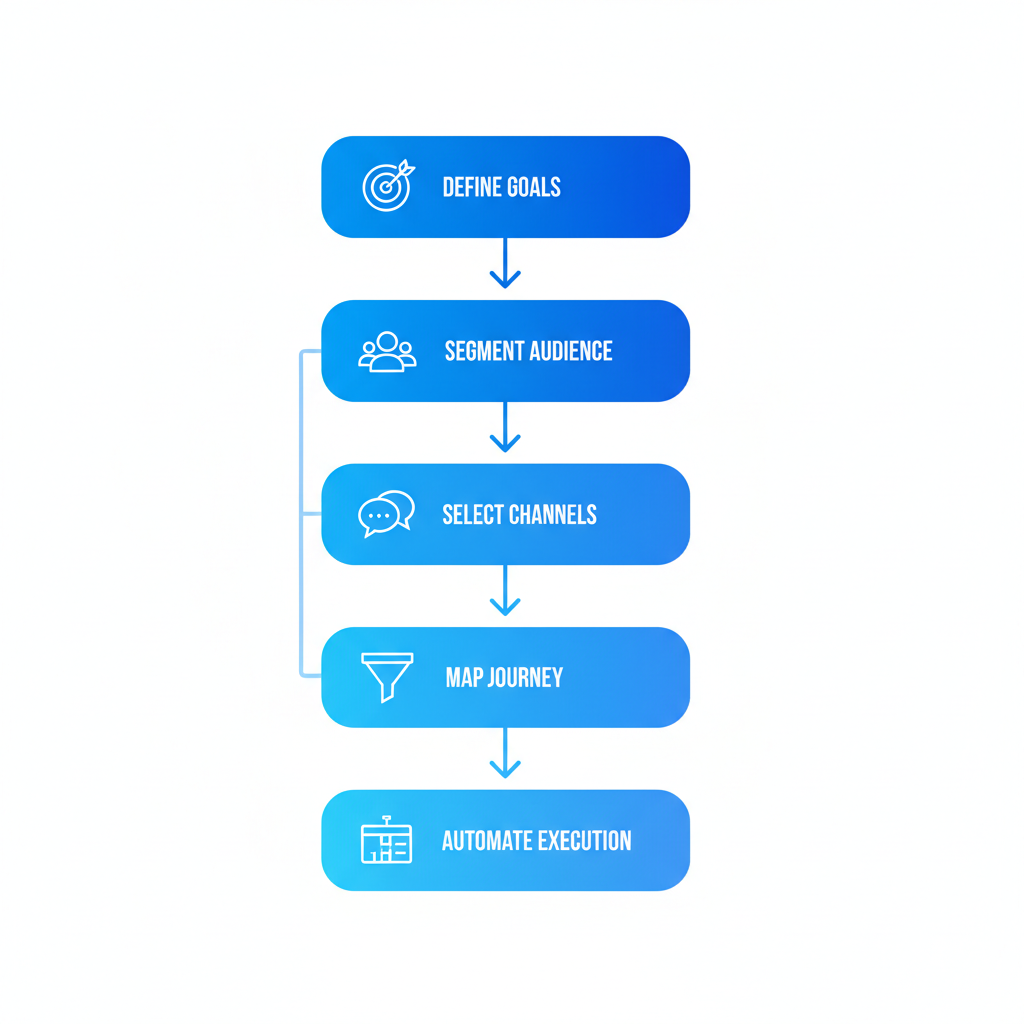
Step-by-step vertical process for building B2B SaaS demand generation playbooks
For quick implementation, start with this outbound playbook framework template:
- Define objectives and personas.
- Map content to funnel stages.
- Schedule cadences: weekly emails, bi-weekly LinkedIn.
- Integrate with AI lead scoring for qualification.
- Monitor and optimize via RevOps dashboards.
This approach enhances SaaS customer acquisition, setting the stage for seamless pipeline progression.
2. Implementing AI Lead Scoring
In the realm of SaaS Growth Strategies, AI-powered lead scoring stands out as a transformative tool for enhancing sales efficiency. By leveraging machine learning, businesses can prioritize leads intelligently, focusing resources on high-potential prospects within go-to-market systems.
AI lead scoring mechanics rely on data inputs like user behavior, firmographics, and engagement metrics to build predictive models. These ML-driven qualification processes analyze patterns to assign scores, predicting conversion likelihood. Implementation involves integrating with your CRM, starting with data mapping and model training. For accuracy, we draw from expert tactics such as iterative refinement of algorithms, ensuring ethical data use to avoid bias. In B2B SaaS demand generation, this reduces manual reviews by up to 50%, enabling teams to scale outreach effectively while feeding valuable insights into RevOps infrastructure.
For SaaS customer acquisition, begin with behavioral signals like trial interactions. We advise this basic setup:
How-to: Basic AI Lead Scoring Setup
- Connect CRM to AI platform.
- Input key data: emails, page views, demo requests.
- Train model on historical conversions.
- Set thresholds for sales handoff.
- Monitor and refine quarterly for ethical, unbiased performance.
This approach builds predictable revenue streams ethically.
3. Establishing RevOps Infrastructure
At Growth Architects Group, we view RevOps infrastructure as a cornerstone of effective SaaS Growth Strategies. By unifying sales, marketing, and customer success teams, it fosters b2b scalable revenue engines that drive predictable revenue through structured operations alignment frameworks.
Definition: RevOps infrastructure encompasses the integrated systems, including playbooks, automation tools, and dashboards, that streamline revenue operations for B2B SaaS companies.
Key components include process mapping to identify bottlenecks and tool stacks for seamless integration. Implementation begins with a structured kickoff phase, establishing repeatable processes as seen in successful startups during their 12-24 month scaling stage. We then advance to scaling phases, refining revenue ops systems for cross-functional collaboration. Analytics dashboards track performance, measuring effectiveness in SaaS customer acquisition and enabling data-driven adjustments.
For optimal results, focus on dashboard KPIs like pipeline velocity and conversion rates to gauge B2B SaaS demand generation ROI. This infrastructure not only enhances efficiency but also supports multi-channel campaigns by providing robust operational backing.
4. Executing Multi-Channel Campaigns
Effective SaaS Growth Strategies often hinge on seamless multi-channel coordination, where outbound efforts across email, social media, and paid ads amplify reach and drive conversions in competitive B2B landscapes. By integrating these channels, we ensure messages resonate with targeted audiences, fostering trust and accelerating pipeline growth.
Campaign execution begins with meticulous planning: define clear objectives, segment audiences based on firmographics and behaviors, and personalize content to address specific pain points. We leverage tools like HubSpot for automation and Google Analytics for real-time tracking, enabling A/B testing of subject lines, ad creatives, and landing pages to refine performance. For B2B SaaS demand generation, this omnichannel outreach incorporates SEO insights to blend outbound tactics with inbound synergy, enhancing visibility. Measurement focuses on key metrics such as open rates, click-throughs, and conversion funnels, allowing iterative optimizations that tie directly to revenue goals. These coordinated lead gen efforts support our GTM framework, ensuring scalable results.
A practical tip for SaaS customer acquisition involves a LinkedIn sponsored content sequence paired with follow-up email nurtures. We start with thought-leadership posts targeting decision-makers, then retarget engaged users via personalized emails offering demos. This approach typically boosts response rates by 25 percent, streamlining the path from awareness to closed deals and optimizing acquisition efficiency.
5. Optimizing Acquisition Costs
In SaaS Growth Strategies, one of the biggest hurdles is high customer acquisition costs that can erode margins quickly. We see startups pouring resources into broad campaigns without clear ROI, leading to inefficient scaling. Effective SaaS customer acquisition demands a shift toward data-driven precision to achieve cost-efficient scaling.
To lower these costs, start by analyzing key metrics like CAC payback period, which measures how long it takes to recover acquisition expenses through customer revenue. Aim for under 12 months in competitive markets. Optimize through targeting refinement, such as using AI for lead scoring, and automation in email sequences to nurture prospects efficiently. For B2B scenarios, account-based marketing narrows focus on high-value accounts, boosting conversion rates. Integrate these with RevOps infrastructure for real-time ROI tracking, aligning sales and marketing on performance data. As the global SaaS market surges toward $819 billion by 2030, such acquisition optimization techniques ensure sustainable growth.
A practical tip for B2B SaaS demand generation: Calculate your CAC ratio benchmark monthly to guide adjustments. We build revenue engines that scale for B2B companies through targeted b2b revenue growth partnerships, guaranteeing measurable outcomes.
CAC = Total Sales & Marketing Spend / Number of New Customers Acquired
Payback Period = CAC / (Average Monthly Revenue per Customer - Variable Costs)
Benchmark: CAC Payback < 12 months
6. Designing Scalable GTM Systems
At Growth Architects Group, effective SaaS Growth Strategies begin with designing scalable go-to-market blueprints that support long-term expansion. We focus on building scalable revenue frameworks tailored for B2B online service businesses, ensuring systems evolve from foundational setups to robust operations.
Our approach emphasizes key components such as strategy development, process automation, and performance analytics. We guide clients through phases inspired by proven scaling models: starting with a structured kickoff for product-market fit and initial validation in the first 12 months, then systematizing growth with repeatable processes in months 12-24, and finally achieving operational scalability by expanding markets and refining systems in months 24-48. This B2B SaaS demand generation focus creates repeatable engines that drive predictable outcomes. Our advisory support includes weekly strategy calls and monthly reporting to optimize these frameworks.
To apply this, map your current SaaS customer acquisition processes against an ideal scalable model. Identify gaps in lead generation and conversion, then prioritize automation upgrades for efficiency. This exercise reveals quick wins for revenue predictability.
GTM System Mapping Template
| Component | Current State | Target Scalable Model |
|---|---|---|
| Lead Generation | Manual Outreach | Automated Demand Gen |
| Conversion | Inconsistent Follow-up | AI-Driven Lead Scoring |
7. Enhancing Revenue Predictability
In SaaS Growth Strategies, achieving predictable revenue requires robust frameworks that integrate analytics and conversion support for stable outcomes. We emphasize RevOps infrastructure to forecast and sustain growth, drawing from established marketing models like those in the Ultimate Guide to Marketing Frameworks. Dashboards provide real-time visibility into sales pipelines, while playbooks standardize processes for consistent execution. For SaaS customer acquisition, we implement sales conversion tactics such as targeted training and dedicated closers to boost close rates in B2B environments. This b2b revenue architecture applies particularly to startups, where forecasting mechanisms tie directly to performance reviews, ensuring alignment with contractual goals and scalable revenue models. We align metrics to contract milestones and iterate playbooks regularly using cohort performance data for insights.
A practical tip: Schedule weekly forecasting calls to review pipeline health and adjust B2B SaaS demand generation efforts promptly, fostering accountability and long-term stability.
8. Measuring Growth Metrics
Effective SaaS Growth Strategies rely on data-driven iteration to ensure sustained success in scaling B2B operations. At Growth Architects Group, we emphasize measuring key performance indicators to refine our revenue engineering approaches and deliver predictable outcomes.
To track progress, focus on essential metrics such as Lifetime Value (LTV), churn rate, and conversion rates, which reveal the health of B2B SaaS demand generation efforts. We implement iteration cycles using A/B testing to optimize campaigns, drawing on AI tactics like specifying desired outcomes for precise analytics and refining prompts iteratively for deeper insights. Tools like Google Analytics and Mixpanel provide real-time performance tracking, enabling quick adjustments to enhance efficiency. This iteration analytics process aligns with SEO measurement examples, where testing variations improves search visibility and lead quality.
For actionable insights, monitor monthly Customer Acquisition Cost (CAC) trends to gauge SaaS customer acquisition effectiveness. We recommend a simple metrics checklist:
- Calculate LTV:CAC ratio quarterly.
- Analyze churn by cohort monthly.
- Review conversion funnels weekly.
By applying these practices, we capstone our GTM systems with continuous refinement, paving the way for long-term revenue growth.
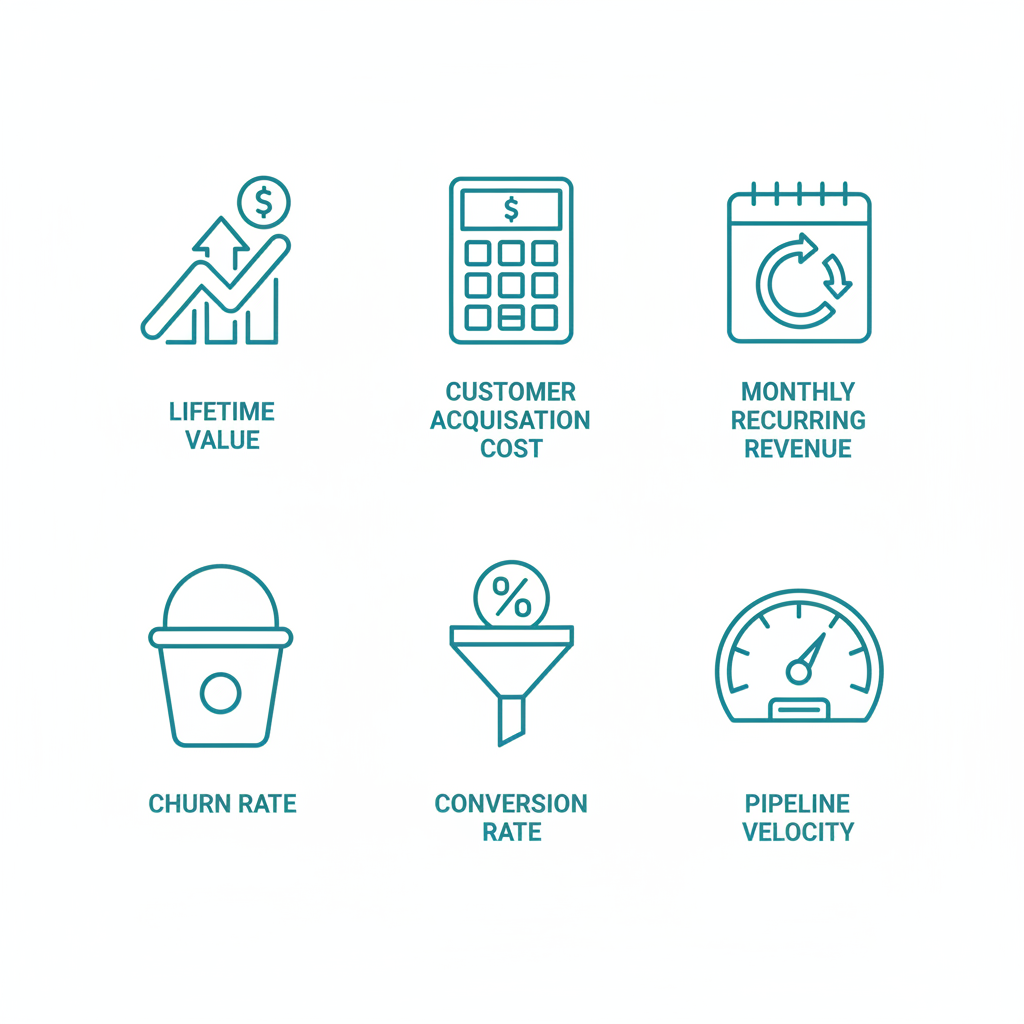
Icon grid illustrating essential SaaS growth metrics for revenue engineering.
Accelerating Your SaaS Trajectory
Implementing effective SaaS Growth Strategies equips B2B leaders with the tools to build predictable revenue engines that scale sustainably. From robust B2B SaaS demand generation to optimized SaaS customer acquisition, these approaches--drawing on data-driven insights like those in SaaS marketing best practices--interconnect to drive long-term success, projecting market growth beyond $819 billion by 2030.
We see powerful synergies, such as AI-powered lead scoring enhancing RevOps infrastructure for holistic expansion frameworks. Next, conduct playbook audits to identify gaps in your GTM systems, ensuring integrated revenue tactics align with performance goals under structured contractual frameworks.
Audit your current setup today: evaluate demand funnels, metrics tracking, and automation. As your partners in revenue engineering, we offer end-to-end support to guarantee meetings and ROI through rapid deployment cadences. Explore our resource hub for tailored guidance on building revenue engines that scale for B2B companies.