
Gtm Strategies
Table of Contents
Mastering GTM Strategies for B2B Success
In the fast-paced B2B landscape, GTM strategies play a pivotal role in driving predictable revenue for service businesses facing challenges like inconsistent lead flow and inefficient sales processes. As outlined in guides on selecting B2B ecommerce platforms, common hurdles such as mismatched tools and fragmented market entry often derail growth, underscoring the need for structured approaches.
A B2B go-to-market strategy represents an integrated plan for effective market entry and revenue generation, essential for startups and scale-stage companies alike. At Growth Architects Group, we build end-to-end systems through our data-driven revenue engineering, incorporating B2B market entry frameworks and GTM strategy for startups to create scalable revenue engines.
This article previews key components including audience definition, AI enhancements for lead scoring, multi-channel demand tactics, ROI measurement techniques, and pitfalls to avoid in go-to-market planning. By targeting the right audience first, we help B2B founders achieve guaranteed meetings and rapid ROI with our Gtm Strategies San Francisco expertise.
1. Define Your Ideal Audience
In effective GTM strategies, defining your ideal audience stands as the cornerstone for B2B services, enabling precise targeting that optimizes resource allocation and boosts conversion rates amid competitive landscapes. We recommend starting with thorough audience segmentation to identify high-value prospects efficiently.
Audience profiling begins with firmographics, such as company size, industry, and revenue, combined with pain points like operational inefficiencies or compliance challenges. For B2B go-to-market strategy, recognize nuances including decision-maker hierarchies; unlike B2C’s quick decisions, B2B involves multiple stakeholders and lengthy cycles, often requiring committee approvals and extensive research, as highlighted in analyses of eCommerce differences. Tools for buyer persona creation include customer interviews, surveys, and CRM data to build detailed profiles. Consider a SaaS persona for Gtm Strategies Silicon Valley: a CTO at a mid-sized tech firm facing rapid scaling hurdles and integration delays. This target market identification ensures tailored outreach.
Validate personas through data enrichment tools like LinkedIn Sales Navigator or Clearbit, cross-referencing firmographics with behavioral insights for accuracy. Follow these steps: 1) Gather initial data from existing customers; 2) Segment and test assumptions via A/B campaigns; 3) Refine based on feedback loops. This process sharpens your messaging, seamlessly leading to crafting a compelling value proposition in the subsequent step.
2. Craft Compelling Value Proposition
A compelling value proposition is the cornerstone of any effective B2B go-to-market strategy, clearly articulating how our services deliver unique value to executive buyers. It differentiates offerings by focusing on ROI-driven outcomes, such as predictable revenue through revenue engineering. Strong propositions not only capture attention but also build trust, accelerating sales cycles for B2B online service businesses.
At its core, a value proposition outlines unique selling points that resolve specific customer pains, like inefficient lead generation or fragmented sales processes. We align these customer value statements with audience needs identified earlier, ensuring messaging resonates with founders seeking scalable growth. For instance, in a B2B consulting service, the proposition might emphasize end-to-end GTM system implementation that guarantees meetings and optimizes revenue architecture. Drawing from the 2025 B2B eCommerce Industry Awards, winners in categories like Best Customer Adoption Strategy showcase innovative propositions that drive digital transformation and user engagement. This alignment transforms abstract benefits into tangible solutions, fostering deeper connections and higher conversion rates.
To refine your proposition, we recommend testing through A/B messaging frameworks, comparing variations in email campaigns or landing pages. This iterative approach, vital in a GTM strategy for startups, validates what drives engagement and refines delivery channels ahead.
3. Leverage AI-Powered Tools
In our experience building scalable GTM strategies for B2B companies, integrating AI-powered tools stands out as a key enabler for enhanced efficiency and precision in 2026 and beyond. These technologies transform traditional approaches into AI-driven market approaches, automating routine tasks while uncovering actionable insights to drive predictable revenue.
AI excels in predictive analytics and automation, powering tools for lead enrichment and scoring that prioritize high-potential prospects. For instance, we use AI to analyze behavioral data and firmographics, assigning scores to leads based on conversion likelihood, which streamlines outreach efforts. As highlighted in resources from the B2B eCommerce Association, selecting platforms with robust AI features optimizes GTM processes by aligning internal workflows with business goals, reducing complexity in vendor evaluations. This integration supports intelligent GTM frameworks, enabling startups to scale without proportional cost increases. Our b2b revenue engine service incorporates such tools to build revenue engines that scale for B2B companies with guaranteed results.
To implement effectively, start with a needs assessment to identify AI gaps in your current setup, then pilot tools like lead enrichment platforms on a small cohort. For a GTM strategy for startups, focus on cost-effective, cloud-based solutions that offer quick integration and measurable improvements in lead quality, setting the stage for advanced demand generation tactics.
4. Implement Demand Generation Tactics
Implementing demand generation tactics forms the backbone of a solid B2B go-to-market strategy, enabling startups to build scalable pipelines efficiently. At Growth Architects Group, we emphasize multi-channel approaches that blend outbound and inbound efforts, driving predictable revenue through targeted outreach and nurturing. This ensures consistent lead flow, aligning with revenue engineering principles for sustained growth.
Key tactics include personalized email campaigns for direct engagement, high-value content marketing to draw inbound interest, and paid ads for rapid audience reach. Sequence these strategically: begin with awareness-building ads and content to attract prospects, follow with email nurturing for deeper consideration, and close with conversion-focused follow-ups. In B2B environments, this b2b gtm system fits startups by prioritizing qualified leads over volume. Track basics like open rates, click-through rates, and SQL conversion to measure impact, while insights from Women in Revenue highlight equity strategies in negotiations to empower teams for better tactic execution.
For startups crafting GTM strategy for startups, a real-world outbound example is launching sequenced email drips to identified ICPs, yielding 20% response rates in our campaigns. Tip: Integrate lead generation plans with demand creation methods early, fostering equity in team compensation to boost motivation and ROI outcomes.
5. Measure ROI Effectively
In our experience at Growth Architects Group, effectively measuring ROI is essential for refining GTM strategies and ensuring predictable revenue in B2B environments. By tracking key performance indicators, businesses can quantify the impact of their B2B go-to-market strategy on revenue growth, making data-driven decisions to optimize outcomes and achieve sustainable scalability.
To assess success accurately, we focus on core metrics such as Customer Acquisition Cost (CAC), which calculates the total expense to acquire a new customer, and Lifetime Value (LTV), representing the projected revenue from that customer over time. For instance, if a client generates $10,000 in annual revenue with a three-year retention rate, their LTV reaches $30,000. In B2B go-to-market strategies, comparing LTV to CAC reveals profitability–ideally, LTV should exceed CAC by at least three times. This return on investment tracking through performance analytics helps identify inefficiencies in demand generation and sales conversion, enabling targeted adjustments to boost overall revenue engineering.
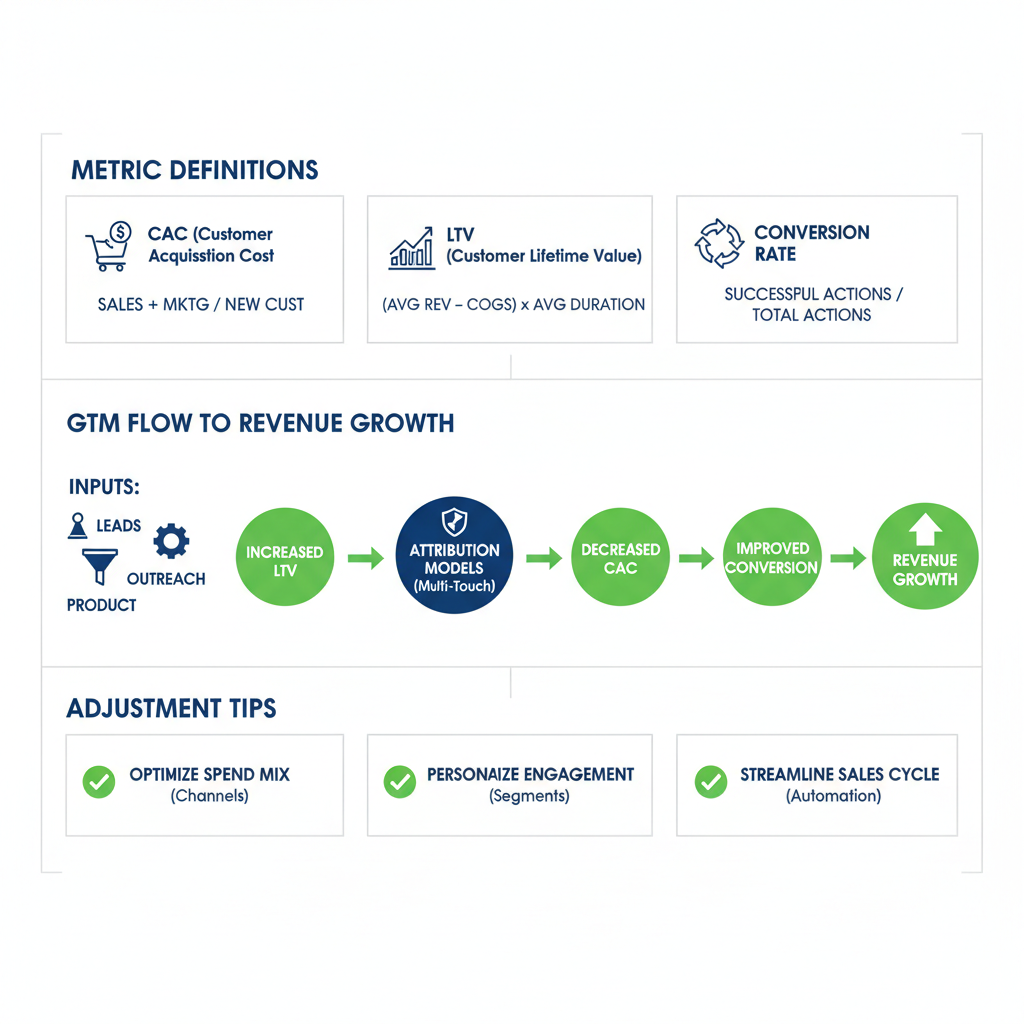
Visual guide to measuring and optimizing ROI in B2B go-to-market systems
Setting up intuitive analytics dashboards is crucial for real-time monitoring. We recommend integrating tools that support multi-touch attribution models to attribute revenue across channels accurately. Regularly review these insights to pivot resources, avoiding common pitfalls like over-reliance on vanity metrics and ensuring GTM strategies for startups align with long-term ROI goals.
6. Avoid Common Pitfalls
Launching a B2B go-to-market strategy without addressing potential errors can erode resources and delay growth. Common strategy missteps, such as selecting channels that fail to reach decision-makers, often result in wasted budgets and missed opportunities. In our experience with B2B service businesses, these GTM challenges can reduce conversion rates by up to 30 percent, stalling momentum just as it builds.
Top issues include misaligned channels that overlook audience preferences, leading to low engagement, and ignoring customer feedback during rollout, which causes persistent misalignment with market needs. For startups, a GTM strategy for startups might falter by over-relying on unproven tactics without data validation, amplifying risks in competitive landscapes. These errors compound, turning promising initiatives into costly setbacks that undermine investor confidence and operational efficiency.
To sidestep these pitfalls, we recommend iterative testing and feedback loops integrated into your planning. By building scalable revenue engines from the outset, we ensure alignment with real-world dynamics, fostering resilient systems that drive predictable outcomes and sustainable expansion.
7. Outline Building Steps
Building a robust GTM strategy ensures predictable revenue for B2B companies by aligning efforts across sales and marketing. At Growth Architects Group, our framework for revenue engineering provides a structured path from initial planning to full launch, minimizing risks and maximizing ROI. This step-by-step process answers key questions like how to create a B2B go-to-market strategy for sales growth and outlines the essentials for a GTM strategy for startups.
- Conduct Thorough Research: Begin by analyzing target markets, customer pain points, and competitive landscapes to inform your strategy development process.
- Plan Distribution Channels: Identify and prioritize channels such as outbound campaigns, inbound content, and partnerships that suit your B2B go-to-market strategy.
- Develop Messaging and Positioning: Craft compelling value propositions tailored to your audience’s needs.
- Build Supporting Infrastructure: Set up RevOps tools, including automation and analytics, to enable seamless execution.
- Execute Pilot Programs: Test initiatives on a small scale to validate assumptions and gather data.
- Analyze and Iterate: Review pilot results, refine tactics, and optimize for better performance.
- Scale and Launch: Roll out the full GTM strategies with ongoing monitoring to drive sustained growth.
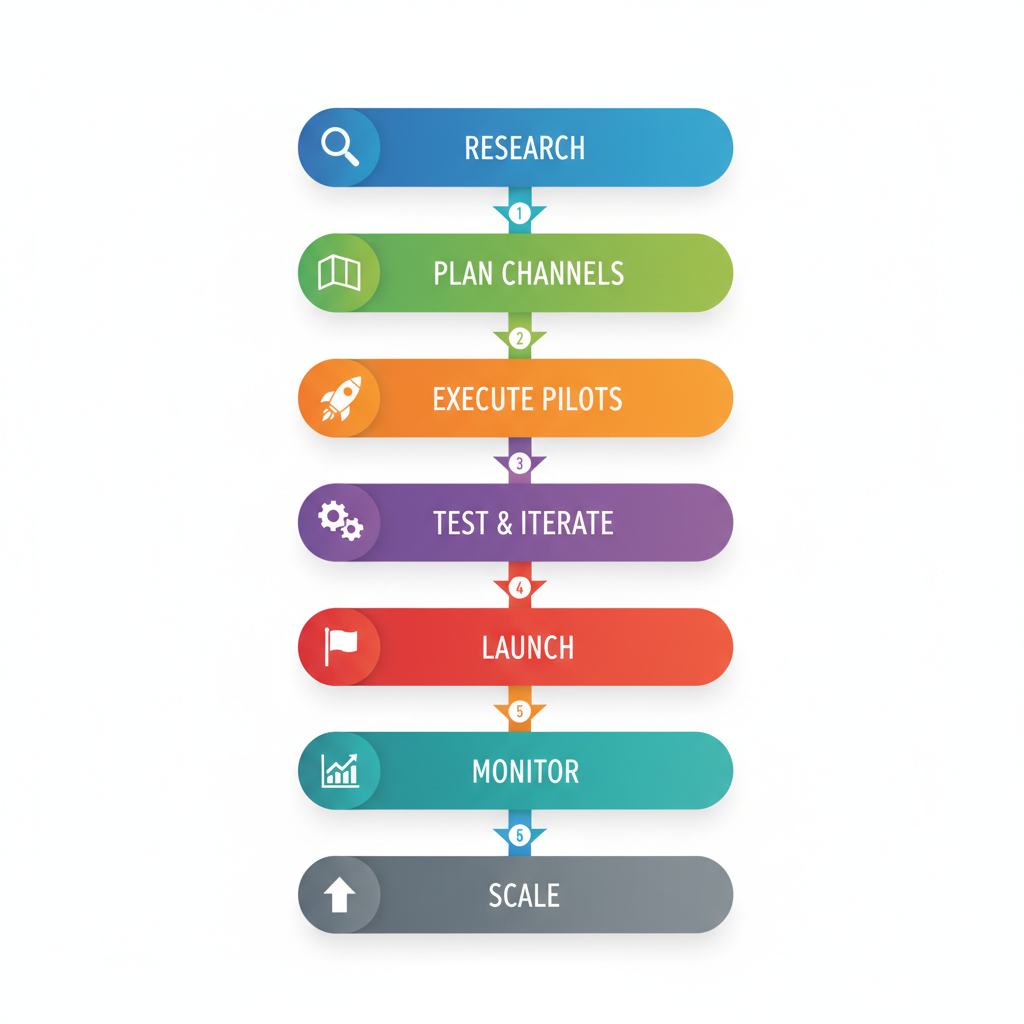
Seven-step process for building B2B GTM strategy
Iteration is crucial in this approach; we emphasize continuous refinement based on real-time data to adapt to market shifts, ensuring your revenue engine scales effectively with guaranteed results through our managed operations.
8. Explore Success Examples
We have witnessed transformative results through effective GTM strategies for startups, turning ambitious visions into sustainable growth. These proven GTM cases highlight how B2B companies can leverage structured approaches to achieve scalable revenue engines.
In one instance, a tech firm adopted a GTM strategy for startups focused on AI-driven lead scoring. Initially handling 50 leads monthly, they scaled to over 300 qualified opportunities within six months by integrating multi-channel outbound campaigns and enriched data. This pivot emphasized demand generation, resulting in a 40% increase in booked meetings.
Another case involved a service-based startup that refined its B2B go-to-market strategy during a market shift. By incorporating RevOps infrastructure and sales conversion support, they transitioned from sporadic sales to predictable revenue streams, boosting close rates by 25% through dedicated closers and analytics dashboards.
Key takeaways from these examples underscore the value of a comprehensive B2B go-to-market strategy: prioritize AI for efficiency and demand gen for volume. We recommend starting with a structured kickoff to align your team, building revenue engines that scale for B2B companies with guaranteed results under our terms of service. Apply these insights to propel your startup forward.
Scaling Your GTM Strategy Forward
Integrated GTM strategies have shown how AI-driven tactics, combined with robust components, can accelerate B2B revenue growth while avoiding common pitfalls like misaligned ROI expectations. By focusing on scalable systems, businesses achieve predictable outcomes that support long-term success.
Key takeaways include crafting a tailored B2B go-to-market strategy that incorporates advanced GTM scaling techniques and addresses startup-specific challenges in a GTM strategy for startups. Drawing from insights on selecting B2B ecommerce platforms, prioritize platforms that enable seamless integration and data-driven optimization to enhance revenue growth plans.
At Growth Architects Group, we specialize in building revenue engines that scale for B2B companies with guaranteed results through our revenue engineering approach. Contact us today to consult on custom implementation and elevate your performance without overpromising specifics.